
Cavitation refers to the process of rapid growth and collapse of vapor pockets about resident nuclei in a liquid due to reduction in the static pressure below the liquid vapor pressure. Hindrance from cavitation is mainly caused by the violent collapses of the flowing cavitation micro-bubbles within very short time scales, which often leads to vibration and damage of mechanical components. Apart from excessive vibrations, cavitation drastically alters the flow field, reducing the hydraulic efficiency of the affected hydraulic components. Even if vibration and erosion problems are avoided by design or operation, it is likely that the performance of the systems is sub-optimal because countermeasures by design were needed to prevent cavitation problems.
Cavitation refers to the process of rapid growth and collapse of vapor pockets about resident nuclei in a liquid due to reduction in the static pressure below the liquid vapor pressure. Hindrance from cavitation is mainly caused by the violent collapses of the flowing cavitation micro-bubbles within very short time scales, which often leads to vibration and damage of mechanical components. Apart from excessive vibrations, cavitation drastically alters the flow field, reducing the hydraulic efficiency of the affected hydraulic components. Even if vibration and erosion problems are avoided by design or operation, it is likely that the performance of the systems is sub-optimal because countermeasures by design were needed to prevent cavitation problems.
Cavitation refers to the process of rapid growth and collapse of vapor pockets about resident nuclei in a liquid due to reduction in the static pressure below the liquid vapor pressure. Hindrance from cavitation is mainly caused by the violent collapses of the flowing cavitation micro-bubbles within very short time scales, which often leads to vibration and damage of mechanical components. Apart from excessive vibrations, cavitation drastically alters the flow field, reducing the hydraulic efficiency of the affected hydraulic components. Even if vibration and erosion problems are avoided by design or operation, it is likely that the performance of the systems is sub-optimal because countermeasures by design were needed to prevent cavitation problems.
A serious problem of cavitation is that it often leads to vibration and damage in critical components, for example, in bearings, diesel engine injectors, marine propellers and rudders, pumps and turbines, and even human artificial heart valves. Cavitation erosion when experienced, normally leads to significant additional repair and maintenance costs or, in extreme cases, component replacement. This, in turn, has implications for plant shutdown or, in the case of ships, dry-docking costs and loss of trade. As such, the damage caused by cavitation erosion may cost many millions of pounds annually to rectify and in some medical scenarios can also be life threatening.
Cavitation is known to occur in various automotive components, where high fluid velocities and rapid accelerations develop; for example, fuel may activate in high pressure fuel injection systems, or lubricant in piston rings and bearings. As a result, cavitation erosion may accumulate, causing damage and affecting engine durability. Cavitation is also known to alter the composition of Diesel fuel properties. In large Diesel engines it might be possible the coolant fluid to activate at cylinder walls, due to vibrations produced by the engine operation. On the other hand, cavitation is believed to enhance atomization, thus improving combustion and reducing emissions in Diesel engines.
Ultrasound cavitation is used as the standard method for surface cleaning process of precious metals. Similarly, the ongoing downscaling of functional Nano-electronic elements in the semiconductor industry makes it increasingly difficult to clean these devices with a physical cleaning method without introducing damage to these structures. High frequency ultrasound cavitation has been successfully utilized as more effective cleaning processes. Recently, the utilization of high intensity ultrasound has been successfully tested as a facile, versatile synthetic tool for Nano-structured materials that are often unavailable by conventional methods.
An experimental investigation has been carried out in order to evaluate the detection of cavitation in actual hydraulic turbines. The methodology is based on the analysis of structural vibrations, acoustic emissions and hydrodynamic pressures measured in the machine. The proposed techniques have been checked in real prototypes suffering from different types of cavitation. In particular, one Kaplan, two Francis and one Pump-Turbine have been investigated in the field. Additionally, one Francis located in a laboratory has also been tested. First, a brief description of the general features of cavitation phenomenon is given as well as of the main types of cavitation occurring in hydraulic turbines. The work presented here is focused on the most important ones which are the leading-edge cavitation due to its erosive power, the bubble cavitation because it affects the machine performance and the draft tube swirl that limits the operation stability. Cavitation detection is based on the previous understanding of the cavity dynamics and its location inside the machine. This knowledge has been gained from flow visualizations and measurements in laboratory devices such as a high-speed cavitation tunnel and a reduced scale turbine test rig. The main techniques are the study of the high frequency spectral content of the signals and of their amplitude demodulation for a given frequency band. Moreover, low frequency spectral content can also be used in certain cases. The results obtained for the various types of cavitation found in the selected machines are presented and discussed in detail in the paper. Conclusions are drawn about the best sensor, measuring location, signal processing and analysis for each type of cavitation, which serve to validate and to improve the detection techniques.
ROLE OF THE CAVFINDER TECHNOLOGIZE COMPANY
Cavfinder is developing end-to-end cavitation and flashing detection suite for the detection, visualization and analysis of flashing and cavitation in all kind of fluid systems. The Company aim to provide and integrated solution to help industrial clients monitor flashing and cavitation to prevent damage and optimize system efficiency.
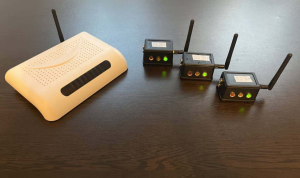
Cavfinder portable system is based on the hardware and software as follow. Hardware has to main parts including the:
1- Sensors which connecting to the metal objects by the magnet to sense and collect the vibration data and sending it to the data logger by wireless protocols. 2- Data logger receives the transferred data for collecting, analyzing and then sending to the laptop by wired protocol for the final process. Software is analyzing the receiving data from the data logger and referring to the input data such as type of media, equipment, temperature and pressure, doing the accurate analyze by using the machine learning algorithm and generating the trustable report for any corrective action. The machine learning algorithm is written based on the deferent range of fluids in various conditions (temperature, pressure, velocity and type of equipment).